

Picture this: A growing e-commerce company watches helplessly as conversion rates plateau despite having access to mountains of customer data. Their sales team spends 70% of their time on administrative tasks, leaving little room for actual selling. Sound familiar? This scenario plays out daily across businesses struggling to compete in an increasingly data-driven marketplace.
The solution isn't hiring more salespeople or working longer hours. It's about working smarter with AI-powered sales intelligence that transforms raw data into actionable insights and automates time-consuming processes.
The Modern Sales Challenge: Why Traditional Methods Fall Short
Today's sales environment generates an overwhelming amount of information. Every customer interaction, website visit, and social media engagement creates data points that could reveal crucial insights—if only teams had the bandwidth to analyze them effectively.
Consider these statistics: Sales representatives spend only 34% of their time actually selling, while the rest goes to data entry, lead research, and administrative tasks. Meanwhile, B2B buyers complete 57% of their purchasing journey before ever speaking to a sales representative.
This disconnect creates three critical problems:
- Missed Opportunities: High-value leads slip through the cracks while teams chase unqualified prospects
- Generic Outreach: One-size-fits-all messaging fails to resonate with sophisticated buyers
- Reactive Decision-Making: Teams respond to market changes after competitors have already adapted
AI Sales Intelligence: Your Competitive Advantage
Artificial intelligence in sales isn't about replacing human relationships—it's about amplifying human capabilities. By leveraging machine learning algorithms and predictive analytics, sales teams can focus on what they do best: building relationships and closing deals.
Intelligent Lead Scoring and Prioritization
Modern AI platforms analyze hundreds of data points to identify which prospects are most likely to convert. Unlike traditional lead scoring that relies on basic demographic information, AI examines:
- Behavioral patterns across digital touchpoints
- Engagement history with marketing content
- Firmographic and technographic indicators
- Intent signals from third-party data sources
A financial services firm recently implemented AI-powered lead scoring and saw their qualified lead conversion rate increase by 43% within six months. The system identified patterns human analysts missed, such as correlations between specific website behaviors and purchase readiness.
Hyper-Personalized Customer Engagement
Generic email templates and scripted calls no longer cut it. Today's buyers expect personalized experiences that demonstrate genuine understanding of their challenges. AI enables this level of customization at scale by:
- Analyzing communication preferences and optimal contact times
- Generating personalized content recommendations
- Predicting which products or services align with specific customer needs
- Crafting individualized messaging based on industry, role, and pain points
Practical AI Applications Driving Sales Success
Conversation Intelligence for Continuous Improvement
AI-powered conversation analytics tools transcribe and analyze sales calls in real-time, identifying successful patterns and areas for improvement. These platforms can detect customer sentiment, track competitor mentions, and highlight key moments that influence deal outcomes.
Sales managers gain unprecedented visibility into team performance without listening to hours of recordings. Representatives receive automated coaching suggestions based on top performers' techniques, accelerating skill development across the organization.
Predictive Forecasting for Strategic Planning
Traditional sales forecasting relies heavily on gut instinct and historical averages. AI transforms this process by analyzing complex variables including:
- Historical win rates by deal characteristics
- Current pipeline velocity and stage progression
- Market conditions and seasonal trends
- Competitive landscape shifts
Companies using AI-driven forecasting report accuracy improvements of up to 82%, enabling better resource allocation and inventory management.
Automated Workflow Optimization
AI doesn't just provide insights—it takes action. Smart automation handles routine tasks like:
- Scheduling follow-up emails based on engagement patterns
- Updating CRM records with conversation summaries
- Routing leads to appropriate team members
- Generating proposal drafts using historical win data
This automation frees sales representatives to spend more time on relationship-building activities that directly impact revenue.
Implementation Strategy: Making AI Work for Your Sales Team
Start with Clean, Integrated Data
AI is only as effective as the data it analyzes. Before implementing AI solutions, organizations must ensure their data infrastructure can support advanced analytics. This includes:
- Consolidating data from multiple sources into a unified platform like Snowflake or Databricks
- Establishing data governance protocols to maintain quality
- Creating real-time data pipelines for timely insights
Choose Solutions That Integrate with Existing Systems
The most successful AI implementations enhance rather than replace current workflows. Look for solutions that seamlessly integrate with your existing CRM, marketing automation, and communication tools. This approach minimizes disruption while maximizing adoption rates.
Focus on Measurable Business Outcomes
Define clear success metrics before implementation. Whether it's increasing qualified lead conversion rates, reducing sales cycle length, or improving forecast accuracy, having specific goals ensures AI investments deliver tangible returns.
Real-World Success Stories
A technology services company struggling with lengthy sales cycles implemented an AI-powered sales assistant that analyzed customer interactions across email, chat, and phone channels. The system identified optimal engagement strategies for different customer segments, resulting in a 31% reduction in average deal closure time.
In another case, a manufacturing distributor used predictive analytics to identify cross-sell opportunities within their existing customer base. By analyzing purchase patterns and product usage data, they uncovered $2.3 million in additional revenue opportunities that human analysis had overlooked.
Overcoming Common Implementation Challenges
Addressing Team Resistance
Sales professionals may initially view AI as a threat rather than a tool. Combat this by:
- Emphasizing AI's role in eliminating tedious tasks, not replacing salespeople
- Providing comprehensive training on new tools and workflows
- Celebrating early wins to build momentum and buy-in
- Creating feedback loops for continuous improvement
Ensuring Data Privacy and Compliance
With increased data utilization comes greater responsibility. Implement robust security measures and ensure all AI applications comply with relevant regulations like GDPR and CCPA. Transparency in data usage builds trust with both customers and team members.
The Future of AI-Powered Sales
As AI technology continues evolving, we're seeing emergence of even more sophisticated capabilities:
- Emotional Intelligence Analysis: AI that detects subtle emotional cues in written and verbal communication
- Dynamic Pricing Optimization: Real-time price adjustments based on market conditions and customer willingness to pay
- Predictive Churn Prevention: Identifying at-risk accounts before they show obvious signs of leaving
However, the key to success isn't adopting every new technology—it's strategically implementing solutions that address specific business challenges and deliver measurable results.
Taking the Next Step
The question isn't whether to adopt AI in sales, but how quickly you can implement it effectively. Organizations that hesitate risk falling behind competitors who are already leveraging these technologies to capture market share and improve customer relationships.
Success requires more than just purchasing software. It demands a comprehensive approach that includes data infrastructure optimization, process redesign, and change management. Working with experienced partners who understand both the technical and business aspects of AI implementation can accelerate time to value and minimize risks.
The sales landscape continues evolving at breakneck speed. Companies that harness AI's power to augment their sales teams' capabilities will thrive, while those clinging to outdated methods will struggle to keep pace. The choice is clear: embrace AI-powered sales transformation or risk obsolescence in an increasingly competitive marketplace.
At Blue Orange Digital, we specialize in helping organizations navigate this transformation journey. Our expertise in AI automation, data engineering, and customer analytics ensures your sales team has the tools and insights needed to excel in today's data-driven economy. Ready to revolutionize your sales performance? Let's explore how AI can unlock your team's full potential.

PE-Grade Data & AI
Assessment Platform
Blueprint gives operating partners a clear, benchmarked view of data and AI readiness across portfolio companies—in days, not months. Start with a free self-service questionnaire or connect environments for automated infrastructure scanning.
Explore Blueprint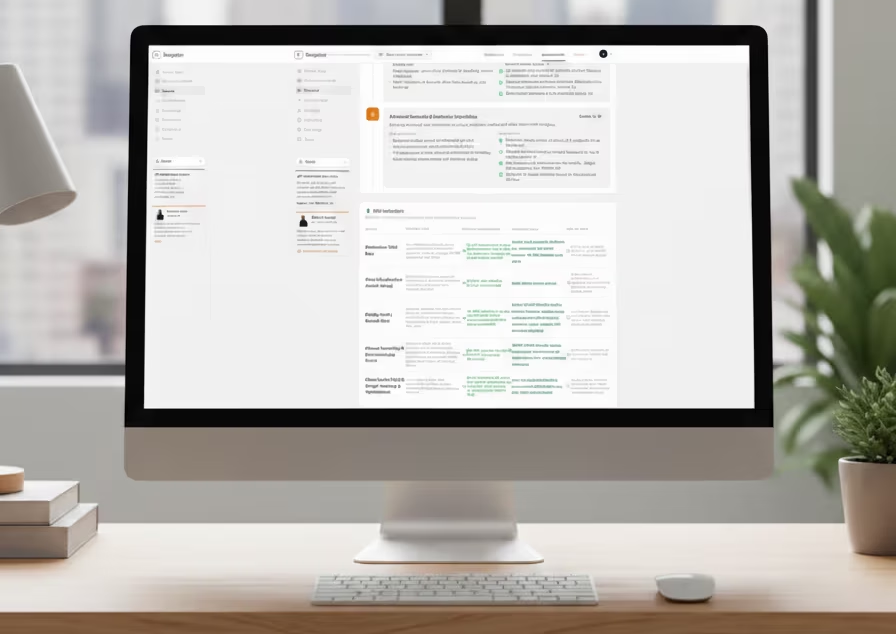
Blueprint Assess
Self-service questionnaire for rapid portfolio triage
- 10-minute guided assessment
- Benchmarked maturity scores across 6 dimensions
- Prioritized recommendations with estimated ROI
- No environment access required
- Shareable PDF report for deal teams
Blueprint Scan
Automated read-only infrastructure scanner
- Connects to Databricks, Snowflake & Azure Fabric
- SOC 2 Type II & ISO 27001 (pending)
- Zero data movement — read-only metadata analysis
- Cost optimization & architecture recommendations
- Deployment-ready modernization roadmaps